
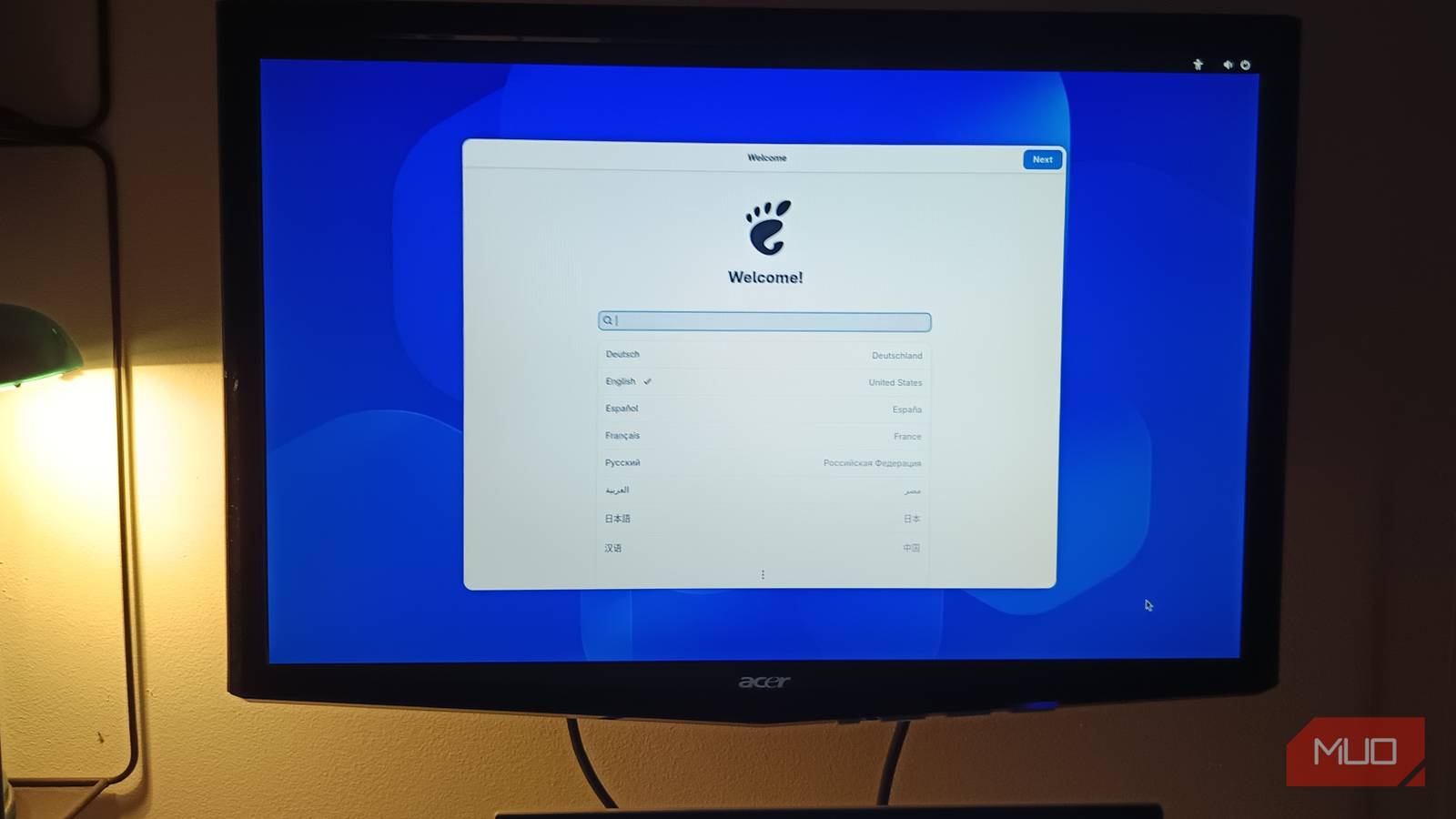
I didn’t install GNOME OS because I thought it would replace my current setup. I installed it because something about it felt … intentional. Almost suspiciously so. GNOME has been quietly tightening its vision for years, and GNOME OS is where that vision stops being a suggestion and starts being the whole point. This isn’t a distro in the way most Linux users think about distros. It’s closer to a statement. Once you boot into it, you realize pretty quickly that it’s not trying to compete with your current system. It’s trying to redefine what a Linux system even is.
This is not an OS that is ready to be your daily driver. It’s still pre-release.
What GNOME OS actually is
A reference system built to show how GNOME wants Linux to behave
GNOME OS is essentially a showcase. It exists to demonstrate the GNOME desktop exactly as its developers intend it to be experienced, without distro tweaks, without customization layers, and without the usual Linux chaos creeping in from the edges. Under the hood, it’s built around technologies like OSTree and immutable system design. In plain English, that means the core system isn’t something you casually poke at. You don’t tweak it into oblivion. You don’t slowly mutate it into something unrecognizable over six months of “just one more change.” Instead, it behaves more like firmware than a traditional Linux install. Stable, predictable, and slightly judgmental if you try to mess with it. And that’s the point.

This might be the most interesting new Linux distro right now
Sometimes, a Linux distro comes along, that just make sense.
First boot feels … controlled
A stripped-down environment that trades freedom for clarity
Booting into GNOME OS feels clean in a way that almost makes you uncomfortable.There’s no clutter. No preinstalled pile of apps you didn’t ask for. No obvious knobs to start turning. It feels deliberate. Curated. Almost like someone took Linux, removed all the “figure it out yourself” energy, and replaced it with “this is how it should work.” At first, that feels refreshing. Everything is where it should be. The interface is cohesive. The experience is consistent in a way most Linux desktops never quite manage. Then it hits you. You’re not in control in the way you’re used to. And that’s where things get interesting.
The friction is very real
Why GNOME OS doesn’t work as a daily driver

Try to live in GNOME OS for more than a short session, and the cracks start to show. Not bugs. Not instability. Just … limits. You don’t install apps the usual way. You rely heavily on Flatpak. System-level tinkering is either discouraged or outright blocked. The usual Linux muscle memory, the quick terminal fixes, the “I’ll just change this one config” mindset, all of that suddenly feels out of place.
It’s not broken. It’s just not built for that. And if you’re someone who enjoys shaping your system to your exact preferences, GNOME OS can feel like wearing gloves while trying to type. Everything technically works, but there’s friction in every movement. Which is exactly why it’s so revealing.
The real insight is in the direction
Sandboxing, apps, and consistency over endless customization

Spend enough time with GNOME OS and a pattern starts to emerge. This isn’t about removing features. It’s about redefining where those features live. Instead of a system where everything can touch everything, GNOME is pushing toward isolation. Apps are sandboxed, and permissions are explicit. The system is protected from the user just as much as the user is protected from the system.
It’s a shift from “your computer is yours, do whatever you want” to “your system should remain stable, no matter what you try.” And whether you like that or not, it solves real problems. Fewer broken systems. More predictable behavior. A desktop that doesn’t slowly decay over time because of one bad tweak you forgot you made three months ago. It feels less like traditional Linux and more like something inspired by mobile operating systems. That’s not an accident.
Freedom vs. direction
The growing tension between classic Linux and GNOME’s vision

This is where things get a little philosophical. Linux has always been about freedom. Choice. The ability to shape your system into whatever you want it to be, even if that means breaking it in creative and sometimes spectacular ways. GNOME OS pushes in the opposite direction. It says: what if the system didn’t let you break it so easily? What if consistency mattered more than flexibility? What if the desktop experience was something designed, not assembled?
For some users, that’s a nightmare scenario. It feels restrictive, almost none-Linux. For others, especially people coming from Windows or macOS, it makes perfect sense. A system that behaves predictably, updates cleanly, and doesn’t require constant babysitting is not a limitation. It’s a relief. And that tension isn’t going away anytime soon.
GNOME OS works best as a glimpse into what’s coming next
After spending time with GNOME OS, I didn’t walk away thinking, “I should switch to this.” I walked away thinking, “Oh. This is where things are heading.” Not necessarily as a full replacement for traditional Linux workflows, but as a parallel path. One where stability, security, and consistency take priority over absolute control. GNOME OS isn’t trying to win you over as a daily driver. It’s trying to show you what a different kind of Linux could look like. And whether you love that idea or quietly resent it, it’s hard to ignore. Because once you’ve seen it, you start noticing those same ideas creeping into everything else.
