
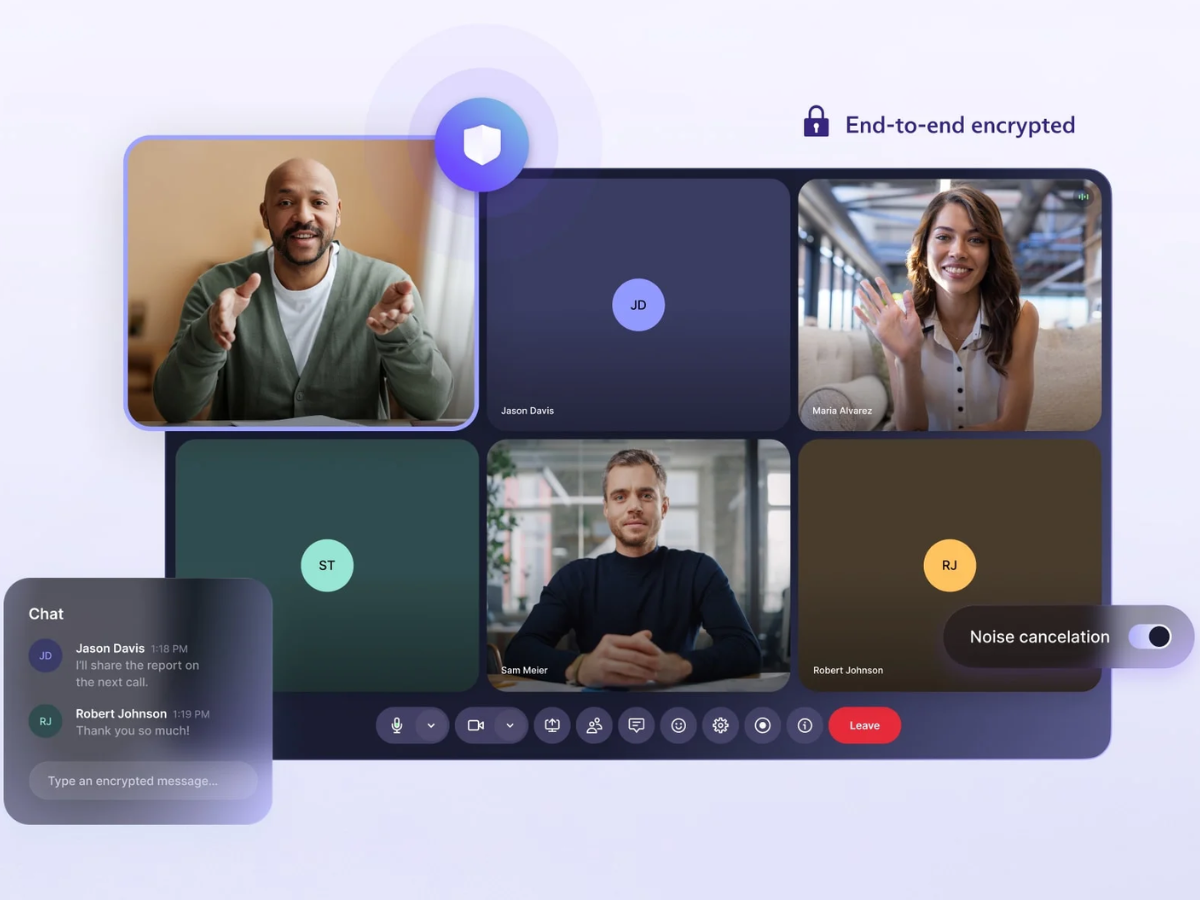
Proton has introduced Meet, a new video conferencing service designed around end-to-end encryption. It aims to serve as a privacy-focused alternative to services like Google Meet, Zoom, and Microsoft Teams. Users don’t need a Proton account to use Meet, and it’s free for meetings with up to 50 participants lasting less than an hour. For longer calls, a paid plan starting at $7.99 per month is required.
Proton explains that Meet was developed in response to demand for EU-based conferencing options that make it easier to comply with GDPR and the California Consumer Privacy Act. The service also addresses concerns related to complications introduced by the US Cloud Act.
Encryption Architecture In Proton Meet
Proton Meet uses Messaging Layer Security (MLS), an open source end-to-end encryption protocol designed for real-time group communication that has been independently reviewed. All media and chat are encrypted on the client side, meaning Proton says it cannot access or process any unencrypted data from calls.
The service is built on WebRTC with Selective Forwarding Units managing media relays to participants. Each meeting link includes an ID and a password stored locally on the client, with participant authentication handled via the Secure Remote Password protocol, which Proton has used across its other services for the past ten years.
MLS creates a cryptographic group with a shared epoch key that changes each time a participant joins or leaves. New members cannot read previous messages, and those who have left cannot access future messages. Participant names are encrypted end-to-end, and email addresses and IP addresses are not shared between participants. Proton states it does not keep records of who attended a meeting.
In case of a server compromise, Proton states that stored databases only contain meeting IDs, and call traffic cannot be read or tampered with.
Practical Security Considerations, Features, and Integrations
The main point of vulnerability is the meeting link itself. If the link is shared with someone who shouldn’t have it, that person could join the call. Proton suggests addressing this by locking the meeting once all expected participants are present, removing any unrecognized attendees, or rotating the link.
Meet functions by generating a shareable conference link that requires no installation for participants. The service integrates with Proton Calendar and allows adding scheduled meetings to Google Calendar and Microsoft Outlook. Proton has not announced a timeline for additional features or capacity tiers beyond the current free and pro plans.
