
“Explore ultimate software reviews for 2026. Compare top programs, learn installation tips, and master every tool like a pro.”
Why Software Reviews Matter More Than Ever in 2026
We are living in the most consequential period of software evolution since the invention of the personal computer. In 2026, the average knowledge worker uses 11 different software applications daily — up from 8 just three years ago. Meanwhile, the global software market has surpassed $740 billion, flooded with thousands of tools all competing for your attention, your workflow, and your budget.
The stakes of choosing wrong have never been higher. A mismatched productivity tool doesn’t just waste the licensing fee — it wastes every hour your team spends working around its limitations. A cybersecurity product that looked impressive in a sales demo but underperforms in production can expose your organization to threats that cost millions to remediate. And with AI now embedded in virtually every major software category, the capability gaps between leaders and laggards widen by the month.
This guide cuts through the marketing noise. Below you will find comprehensive software reviews 2026, organized by category, with honest evaluations, real pricing, performance benchmarks, installation guidance, and mastery strategies. Whether you are a student selecting your first productivity stack, a freelancer evaluating design tools, or an IT director comparing enterprise security platforms, this is your reference.
What Makes a Great Software Program in 2026?
The definition of software quality has shifted dramatically. Speed and reliability — once the primary metrics — are now table stakes. In 2026, the best software programs are evaluated on a richer set of dimensions:
- AI Integration: Does the tool use AI to surface insights, automate repetitive tasks, or enhance output — or is it merely slapping an ‘AI-powered’ badge on legacy functionality?
- Interoperability: How well does it connect with the rest of your stack? Isolated tools create friction. Tools with deep API ecosystems and native integrations multiply your productivity.
- Security Architecture: With data breaches costing an average of $4.88 million per incident (IBM 2024), security-by-design is non-negotiable — not an enterprise add-on.
- Adaptive Pricing: The best tools offer transparent, scalable pricing that grows with you — free tiers for individuals, team plans for small groups, and enterprise licensing that doesn’t require a six-month negotiation.
- Performance on Modern Hardware: Software that fails to leverage multi-core processors, Apple Silicon, or modern GPU acceleration is leaving significant capability on the table.
Key Evaluation Criteria: How We Review Software
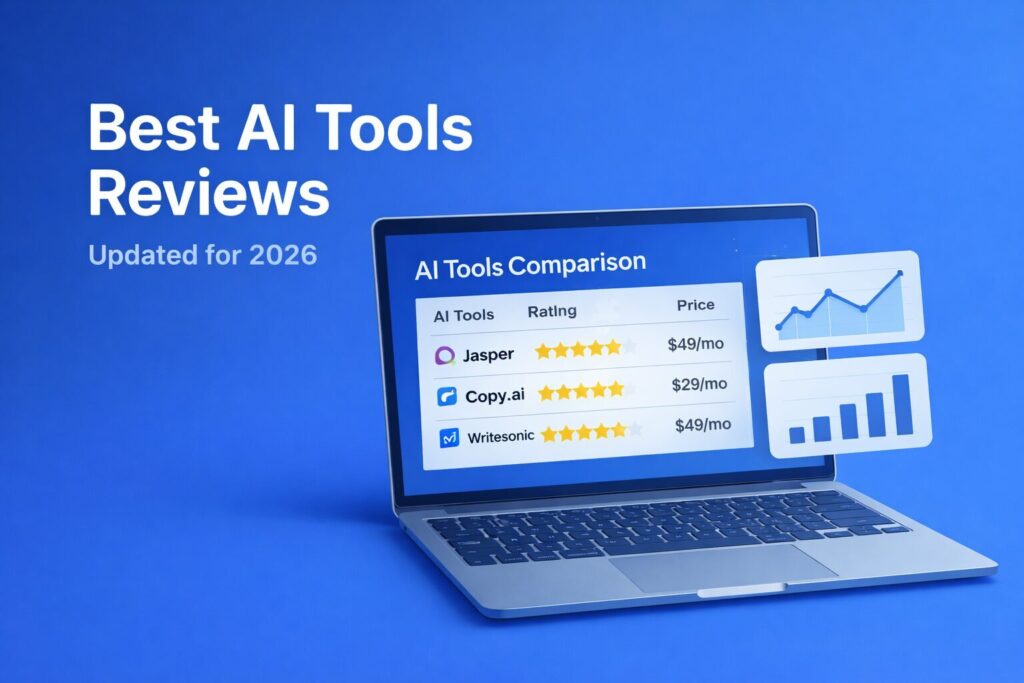
Every tool reviewed in this guide is evaluated against five standardized dimensions. Understanding these criteria will help you apply this framework to any software you evaluate on your own.
| Criterion | What We Measure | Weight |
| Performance | Speed, resource usage, crash rate, startup time | 25% |
| Features | Depth, innovation, AI integration, update cadence | 25% |
| Security | Encryption, compliance certs, breach history, MFA support | 20% |
| Ease of Use | Onboarding time, UI clarity, documentation quality | 15% |
| Pricing & Value | TCO vs. competitors, free tier quality, ROI evidence | 15% |
1. Productivity Tools
Microsoft 365 Copilot — Editor’s Choice
Overview: Microsoft 365 Copilot is the AI-supercharged evolution of the world’s most-used office suite. By embedding a large language model directly into Word, Excel, PowerPoint, Outlook, and Teams, Microsoft has transformed its productivity platform into an intelligent assistant that writes, analyzes, summarizes, and automates alongside you.
Key Features:
- Copilot in Word drafts documents and rewrites sections on command
- Copilot in Excel generates formulas and surfaces data trends from natural language
- Meeting Recap in Teams transcribes calls and extracts action items automatically
- BizChat for cross-app intelligence — query your emails, documents, and meetings together
| ✓ PROS | ✗ CONS |
| Deepest integration in the productivity market | Copilot add-on adds significant per-user cost |
| Enterprise-grade security & compliance | AI quality depends on prompt skill |
| Continuous AI model improvements | Overkill for very small teams |
| Available on all platforms including mobile | Ecosystem lock-in is real |
| Pricing Tier | Cost / Month | Best For |
| Microsoft 365 Personal | $6.99 / user | Individuals |
| Microsoft 365 Business Standard | $12.50 / user | Small teams |
| Microsoft 365 Copilot Add-On | +$30 / user | AI features for any plan |
Real-World Use Case: A financial analyst at a mid-sized firm uses Copilot in Excel to analyze 18 months of revenue data. She types: ‘Show me which product lines underperformed Q3 targets and why.’ In seconds, Copilot generates a chart, a written summary, and flags three anomalies in the raw data that took manual analysts an hour to find.
Best For: Business professionals, analysts, executives, enterprise teams already in the Microsoft ecosystem.
2. AI-Powered Apps
Notion AI — The Thinking Workspace
Overview: Notion AI transforms the already-powerful Notion workspace into a genuine thinking partner. It handles writing, summarizing, translating, Q&A across your entire knowledge base, and database operations — all without leaving your notes or project space.
Key Features:
- AI Q&A: Ask questions about your entire workspace and receive sourced, accurate answers
- Auto-summarize long documents, meeting notes, and research into concise briefs
- Notion AI Projects: AI-assisted task creation and sprint planning from plain-language goals
- Database automation triggered by AI-detected content patterns
| ✓ PROS | ✗ CONS |
| Exceptional flexibility for any workflow | Can overwhelm new users without onboarding |
| AI feels native, not bolted on | Mobile performance lags desktop |
| Strong free tier for individuals | Offline access is limited |
| Excellent template library | Advanced AI requires Notion AI add-on |
Pricing: Free (limited), Notion AI add-on at $8/user/month, Plus plan at $10/user/month.
Best For: Startups, content creators, product teams, researchers, and students who need one workspace for everything.
Real-World Use Case: A content agency uses Notion AI to manage their entire editorial pipeline. A strategist writes a one-sentence brief; AI expands it to a full content outline with suggested headers, SEO keywords, and estimated reading time — cutting brief-to-outline time from 45 minutes to 3.
3. Cybersecurity Software
1Password Business — Zero-Compromise Security
Overview: 1Password is the gold standard in credential and secrets management. With over 80% of data breaches involving compromised credentials, securing how passwords, API keys, and sensitive data are stored and shared is your single highest-ROI security investment.
Key Features:
- End-to-end encrypted vaults with zero-knowledge architecture — 1Password cannot see your data
- Watchtower: Real-time alerts for breached, weak, or reused passwords across the organization
- Secrets Automation: Manages developer credentials, SSH keys, and API tokens with full audit trails
- Travel Mode: Temporarily removes sensitive vaults from devices when crossing borders
- Business reporting dashboard with granular access logs
| ✓ PROS | ✗ CONS |
| Cleanest UX of any password manager | No meaningful free tier |
| Zero-knowledge architecture is genuinely secure | Migration from another manager takes time |
| Excellent passkey and biometric support | Enterprise plan requires annual commitment |
| Scales from individual to enterprise | Occasional sync delays on mobile |
| Plan | Price / Month | Key Inclusion |
| Individual | $2.99 / user | Unlimited passwords, 1GB storage |
| Teams Starter | $19.95 / 10 users | Admin controls, activity log |
| Business | $7.99 / user | Secrets automation, advanced reporting |
Real-World Use Case: A 40-person SaaS company onboards a new developer. Their access to production databases, AWS keys, and staging environments is provisioned through 1Password vaults with role-based permissions. When they leave 6 months later, IT revokes everything in one click — with a full audit trail proving exactly what they accessed.
Best For: Businesses of all sizes, remote teams, developers managing secrets, security-conscious individuals.
4. Cloud Storage Platforms — Head-to-Head Comparison
Cloud storage is foundational infrastructure. Choosing the right platform affects collaboration speed, security posture, and long-term costs. Here is how the major players compare in 2026:
| Platform | Free Tier | Paid Entry | Best Feature | Best For |
| Google Drive | 15 GB | $2.99/mo (100GB) | Deep Google Workspace integration | Students, Google users |
| OneDrive | 5 GB | Included w/ M365 | Native Windows & Office sync | Microsoft shops |
| Dropbox | 2 GB | $9.99/mo | Smart Sync & Paper docs | Creative teams |
| Box | 10 GB | $15/mo | Enterprise compliance & HIPAA support | Regulated industries |
| iCloud Drive | 5 GB | $0.99/mo (50GB) | Seamless Apple device sync | Apple ecosystem users |
Editor’s Pick: Google Drive remains the best all-around value for most users, while Box wins for regulated industries requiring HIPAA, FedRAMP, or SOC 2 Type II compliance. OneDrive is the obvious choice for anyone whose organization is already paying for Microsoft 365.
Real-World Use Case: A healthcare consultancy uses Box because it offers HIPAA Business Associate Agreements (BAAs), granular access controls, and immutable audit logs — requirements that disqualify every cheaper competitor for their use case.
5. Creative & Design Tools
Figma — The Design Standard
Overview: Figma is the browser-native interface design and prototyping tool that has become the default for product teams worldwide. Its collaborative architecture and expanding AI features have made it the tool that replaced both Sketch and Adobe XD in most professional workflows.
Key Features:
- Real-time multi-user collaboration — multiple designers in one file simultaneously
- Dev Mode for pixel-perfect developer handoff with auto-generated CSS and measurements
- AI-powered layout suggestions, component naming, and prototype flow generation
- FigJam whiteboard for brainstorming, diagramming, and workshops
- Figma Slides for presentation design built on the same component system
| ✓ PROS | ✗ CONS |
| Best-in-class real-time collaboration | Complex animations require supplementary tools |
| Runs entirely in browser — no installs | Large files can slow browser performance |
| Enormous plugin ecosystem | Pricing jumped significantly for teams post-Adobe deal |
| Free tier is genuinely useful | Less powerful for print/marketing design |
Pricing: Starter free, Professional at $12/editor/month, Organization at $45/editor/month.
Best For: UX/UI designers, product managers, developers, and remote product teams.
Canva — Design for Everyone – Ultimate software reviews
Overview: Canva democratizes professional design for non-designers. Its AI Magic Studio features — including Magic Design, background removal on video, and Magic Resize — have made it indispensable for marketing teams and content creators operating without in-house design resources.
Pricing: Free (generous), Canva Pro at $14.99/month, Canva Teams at $29.99/month for 5 users.
Best For: Social media managers, small business owners, educators, HR teams, and anyone who needs professional visuals without a design degree.
6. Communication Apps — Platform Comparison
| Platform | Best Use Case | AI Features | Free Tier | Starts At |
| Slack | Team messaging hub | AI summaries, search | 90-day history | $7.25/user/mo |
| Microsoft Teams | Enterprise comms + meetings | Copilot integration | Limited | Included w/ M365 |
| Discord | Communities & gaming teams | Basic bot AI | Full featured | $9.99/mo Nitro |
| Zoom | Video-first meetings | AI Companion summaries | 40-min limit | $13.32/user/mo |
| Google Chat | Google Workspace teams | Gemini integration | Included | Included w/ Workspace |
Overview: Slack remains the gold standard for developer and product teams who live in integrations. Microsoft Teams wins on sheer enterprise adoption, particularly where Microsoft 365 is already deployed. Zoom’s AI Companion — which generates meeting summaries, action items, and chat recaps automatically — is the most practically transformative AI feature in the communications space.
Real-World Use Case: A global product team uses Slack as its communication backbone. A developer in Singapore sets a message to post in #releases at 9 AM Sydney time. The Tokyo team member, joining a thread at 2 AM, uses Slack AI to summarize 4 hours of conversation in seconds before responding. Zero missed context across three time zones.
7. Automation Tools
Zapier vs. Make (Formerly Integromat) — The Definitive Comparison
Overview: No-code automation has gone from a power-user novelty to a core business competency. Zapier and Make dominate the market but serve different user profiles. Understanding which is right for your workflow can save thousands of hours annually.
| Feature | Zapier | Make (Integromat) |
| Interface | Simple, linear, beginner-friendly | Visual canvas, complex flows |
| App Integrations | 7,000+ | 2,000+ |
| AI Zap Builder | Yes — natural language | Basic AI suggestions |
| Pricing Model | Task-based | Operation-based (cheaper at scale) |
| Free Tier | 100 tasks/month | 1,000 operations/month |
| Best For | Non-technical users, SMBs | Developers, complex workflows |
| Error Handling | Basic retry logic | Advanced branches & rollbacks |
Verdict: Choose Zapier if you need to set up automations quickly without technical knowledge and your workflows are relatively straightforward. Choose Make if you need complex conditional logic, lower per-operation costs at volume, or you have developers comfortable with visual programming.
Real-World Use Case: An e-commerce company uses Zapier to trigger a 7-step customer journey: when an order exceeds $500, Shopify alerts a Slack channel, creates a Trello card for the VIP team, logs the order to Airtable, sends a personalized thank-you email via Mailchimp, and notifies the warehouse team via SMS — all within seconds of purchase.
8. Video Editing Software
DaVinci Resolve vs. Adobe Premiere Pro — Complete Comparison
Overview: Video production has moved from specialist skill to general business competency. Marketing teams, educators, content creators, and corporate communicators all need capable video editing software in 2026. The choice between these two giants shapes your entire post-production workflow.
| Category | DaVinci Resolve 19 | Adobe Premiere Pro 2026 |
| Price | Free / $295 one-time (Studio) | $54.99/month |
| Color Grading | Industry-leading (Hollywood standard) | Strong but not primary strength |
| AI Features | AI Object Mask, Voice Isolation | Auto Reframe, Speech to Text, Firefly |
| Collaboration | Multi-user (Studio only) | Frame.io integration |
| Learning Curve | Steep for beginners | Moderate — industry standard |
| Platform | Mac, Windows, Linux | Mac, Windows |
| Best For | Colorists, filmmakers, studios | Editors in Adobe ecosystem |
Verdict: DaVinci Resolve’s free version is staggeringly capable and its Studio upgrade is a one-time payment — making it the clear financial winner. Adobe Premiere Pro commands a loyalty driven by ecosystem integration (After Effects, Photoshop, Frame.io) and the largest professional community. For independent creators, DaVinci Resolve is the easy choice. For agency and studio environments already on Creative Cloud, Premiere Pro’s integration advantages justify the subscription.
Best For: DaVinci Resolve — independent filmmakers, colorists, students. Premiere Pro — advertising agencies, corporate video teams, creators in the Adobe ecosystem.
9. Project Management Platforms
The 2026 Project Management Landscape
The project management software market reached $9.4 billion in 2025 and continues growing as remote and hybrid work drives demand. Here is the comparative landscape of the leading platforms:
| Tool | Best Methodology | AI Features | Free Tier | Entry Price |
| ClickUp | All (highly customizable) | ClickUp AI everywhere | Generous | $7/user/mo |
| Asana | Task & project tracking | AI summaries, status | 15 users | $10.99/user/mo |
| Jira | Agile / Scrum | Atlassian Intelligence | 10 users | $8.15/user/mo |
| Monday | Visual workflows | AI column suggestions | 2 seats | $9/user/mo |
| Linear | Software development | AI issue writing | Unlimited | $8/user/mo |
| Notion | Docs + tasks combined | Notion AI throughout | Generous | $10/user/mo |
Editor’s Pick: ClickUp offers the most functionality per dollar, making it the top recommendation for most teams. Jira remains the default for software engineering teams running formal Scrum processes. Linear has captured significant developer loyalty for its speed and simplicity. For teams that want project management and documentation unified, Notion is unmatched.
Real-World Use Case: A 12-person digital agency uses ClickUp to manage 30 concurrent client projects. Each client has a dedicated Space with task lists, a shared Doc for strategy, a Dashboard showing budget burn and milestone status, and automated status reports that email clients every Friday — without a single human manually compiling data.
10. Utility & System Optimization Tools
Essential Utilities for 2026
System optimization, file management, and developer utilities are the unsexy backbone of a high-performance digital workflow. These are the tools power users have quietly relied on for years — and that mainstream users are only beginning to discover.
| Tool | Category | Platform | Price | Key Benefit |
| 1Blocker | Ad & script blocking | Mac / iOS | $2.99/mo | Full-page ad blocking + privacy firewall |
| CleanMyMac X | Mac optimization | macOS | $34.95/year | Malware removal + storage reclamation |
| Everything | File search | Windows | Free | Instant file search across all drives |
| Raycast | Launcher / productivity | macOS | Free + Pro | Replaces Spotlight with AI + extensions |
| AutoHotKey | Windows automation | Windows | Free | Script any repetitive task or shortcut |
| BetterTouchTool | Mac input customization | macOS | $22 one-time | Custom gestures, window snapping, macros |
Real-World Use Case: A developer on macOS uses Raycast as her system command center. She searches files, runs terminal commands, triggers Zapier webhooks, checks GitHub PR status, and controls Spotify — all from one keyboard shortcut, without ever touching her mouse. Her estimate: she saves 40 minutes per day versus the stock Spotlight experience.
Installation Guide: Get Any Software Running Perfectly (Ultimate software reviews)
System Requirements Checklist
Before installing any major software in 2026, run through this universal checklist to prevent the most common installation failures:
- RAM: Minimum 8GB for most productivity tools; 16GB recommended for creative software, AI apps, and video editors. 32GB+ for professional video editing and 3D work.
- Storage: Maintain at least 15% free disk space at all times. SSDs are essentially mandatory for acceptable performance. AI tools may require 10-40GB for local model storage.
- OS Version: Always check minimum OS requirements. Outdated operating systems are the #1 cause of silent feature degradation in modern software.
- Internet Connection: Required for activation, cloud sync, and AI features. Many tools fail silently if they cannot reach license servers at first launch.
- Administrator Rights: Most software requires admin-level installation permissions. Have credentials ready before beginning.
Setup Tips for Maximum Performance
- Always download from official sources. Third-party download sites are a primary vector for bundled malware — particularly for popular free tools.
- Disable automatic startup for tools you use occasionally. Each app that launches at startup costs RAM and extends boot time. Audit your startup programs quarterly.
- Run the installer with all other applications closed. Reduces memory conflicts and prevents incomplete file writes during installation.
- Create a system restore point (Windows) or Time Machine backup (macOS) before installing major software. This takes 5 minutes and saves hours if something goes wrong.
- Read through Settings before using any new tool for the first time. Most users miss critical performance and privacy settings that are buried in preferences.
Common Installation Issues and Solutions
| Problem | Likely Cause | Solution |
| ‘Unverified developer’ error (Mac) | Gatekeeper security | System Settings → Privacy → Allow Anyway |
| Installer crashes mid-process | Insufficient disk space | Free 5GB+, then retry |
| App won’t connect to servers | Firewall blocking ports | Add to firewall exceptions; check port 443 |
| Performance degraded post-install | Background auto-updates | Disable auto-update in app settings |
| License activation fails | Clock sync issue | Sync system clock via internet time server |
| App won’t launch after install | Missing dependencies | Install latest Visual C++ / .NET runtime (Windows) |
How to Master Any Software: The 2026 Framework
Software is only as powerful as your ability to use it. The gap between a beginner and a power user of the same tool is rarely talent — it is method. Here is the framework that consistently produces software mastery in the shortest time:
Step 1 — Learn the Keyboard Shortcuts First
Keyboard shortcuts are the single highest-ROI investment in any new tool. Studies in UI efficiency consistently show that expert users are 30-40% faster than intermediate users — and the primary differentiator is shortcut fluency, not feature knowledge.
Actionable method: On your first day with any new tool, open the keyboard shortcut reference (usually found under Help or with Ctrl/Cmd + ?). Identify the 10 actions you will perform most frequently. Write them on a sticky note. Commit to using the shortcut — even if it’s slower at first — every single time for two weeks. By week three, they are instinctive.
Step 2 — Use Built-In Tutorials and Interactive Onboarding
Almost every major software product in 2026 ships with an interactive tutorial or guided onboarding. The majority of users click ‘Skip’ immediately. This is a significant mistake.
Built-in tutorials are engineered to teach the specific feature set of that exact version of the product. They surface capabilities and workflows that generic YouTube tutorials miss. Spend 20 minutes on the official interactive guide before touching the product independently — it consistently reduces time-to-proficiency by days.
Step 3 — Leverage AI Assistants Inside Your Software
In 2026, most major software platforms have built-in AI assistants. Copilot in Microsoft 365, Notion AI, ClickUp AI, Slack AI — these are not just productivity tools. They are also extraordinarily effective learning tools.
When you don’t know how to accomplish something in the software, ask the built-in AI assistant first. ‘How do I create a dependent dropdown in Excel?’ typed into Copilot will give you a step-by-step answer tailored to the exact version you are running. This beats searching Stack Overflow for a 4-year-old answer that references a deprecated menu.
Step 4 — Customize Settings for Your Specific Workflow
Default settings are designed for the median user. You are not the median user. Spend 30 minutes in every new tool’s settings panel during your first week. Look for:
- Notification settings: Turn off everything that doesn’t require immediate action. Software notifications are the #1 source of deep work interruption.
- Keyboard shortcut customization: Most tools allow you to remap shortcuts. Make your five most-used actions the most physically comfortable key combinations.
- Theme and display settings: Dark mode is not merely aesthetic — research suggests it reduces eye fatigue during long sessions. Set it if available.
- Default save locations and file formats: Ensure exports and saves go where you expect. Hunting for files wastes more time than most people account for.
- Integration permissions: Connect your new tool to your calendar, email, and other core apps during initial setup. Integrations you delay setting up often never get set up.
Step 5 — Build Deliberate Practice Into Your Workflow
Mastery is not achieved by using software — it is achieved by intentionally pushing beyond your current comfort zone. Set a personal rule: each week, identify one feature of a core tool that you have never used. Spend 15 minutes learning it, and actively apply it to real work.
Over 52 weeks, this adds 52 capabilities to your toolkit — compounding in ways that make you fundamentally more capable than peers using the same software superficially.
Conclusion: Choose Precisely, Install Deliberately, Master Continuously
The software you choose is infrastructure. Like the roads and pipes beneath a city, most people only notice it when something goes wrong — but the quality of that infrastructure shapes everything built on top of it.
In 2026, the best software programs are defined not by their feature lists, but by their ability to disappear into your workflow — handling complexity quietly so your attention stays on the work that actually matters. Microsoft 365 Copilot handles the documentation overhead. 1Password eliminates the cognitive weight of credential management. Zapier runs the repetitive operational threads so your team focuses on judgment and creation. Figma makes collaboration feel frictionless across time zones. DaVinci Resolve gives independent creators Hollywood-grade tools for a one-time $295 investment.
The install software guide in this article is designed to prevent the practical failures — the blocked installs, the misconfigured settings, the missed optimizations — that make even great software feel disappointing in its first weeks.
And the mastery framework exists because owning a tool and wielding it are categorically different things. The professionals who will be most effective in 2026 are not those with the most software subscriptions. They are those who have chosen their stack with precision, installed it with care, and committed to continuous mastery of the tools they use every day.
Compare software tools with the criteria in this guide. Evaluate honestly. Install deliberately. And then do the work that makes the tools worth having.
